Oil Surges and Global Markets Shake as U.S.-Iran Conflict Deepens
WASHINGTON — Financial markets reacted sharply Tuesday as fighting between the United States and Iran intensified, pushing oil prices higher and sending stocks lower across Europe, Asia and the United States.
President Donald Trump acknowledged that Americans could feel the economic effects of rising energy costs as the conflict continues to disrupt key oil- and gas-producing areas in the Middle East. Speaking from the Oval Office, he suggested that energy prices would eventually fall once hostilities end, though he did not indicate when that might happen.
The confrontation entered its fourth day with Israel targeting Iranian missile facilities and weapons infrastructure, while Iran responded with strikes across the Persian Gulf region, including reported attacks near U.S. diplomatic sites in Saudi Arabia, Kuwait and Dubai. The escalating exchanges have unsettled global investors, with major stock indexes sliding and the S&P 500 falling roughly 1% after steeper early losses.
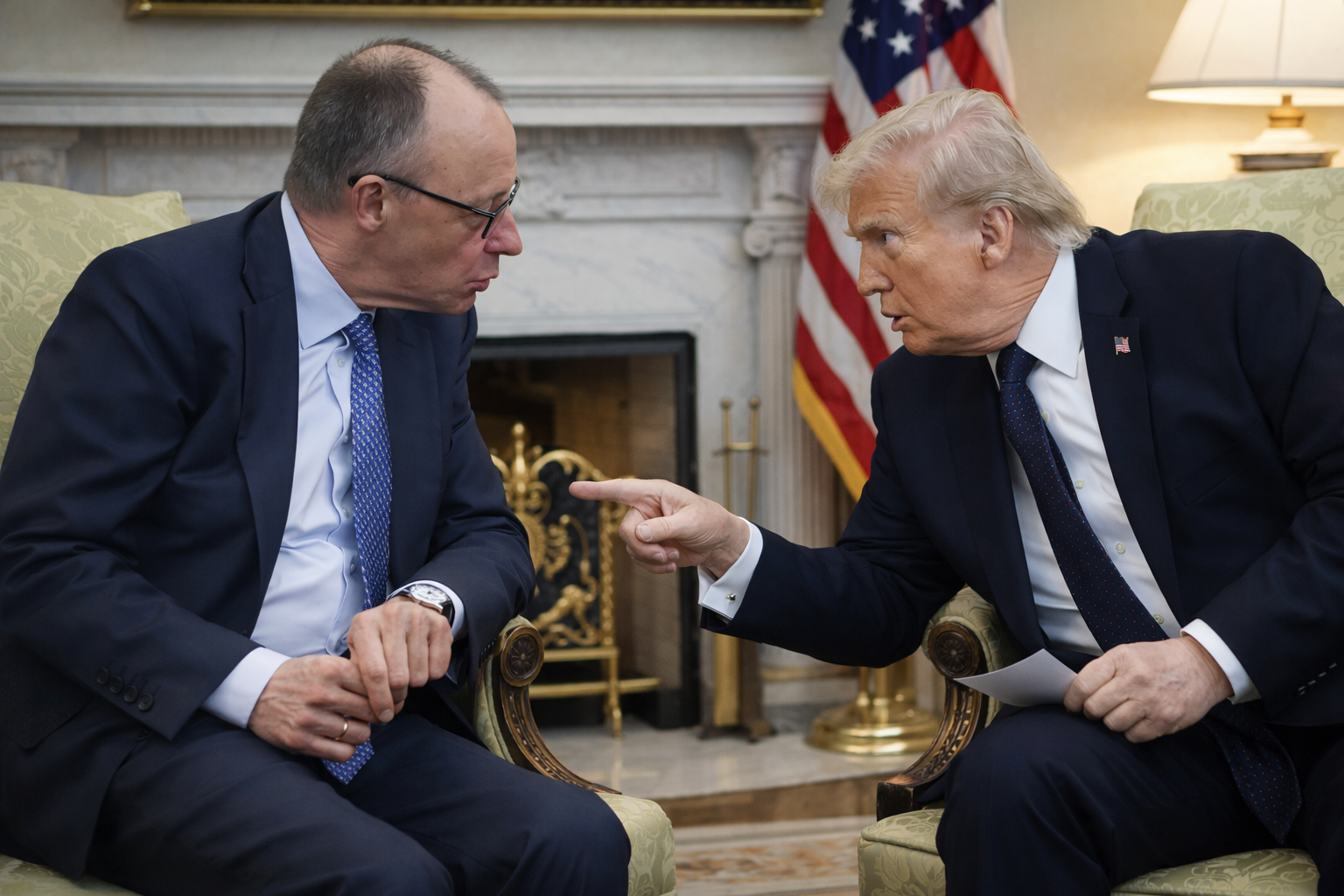
European leaders are also grappling with the fallout. Some governments have reinforced their military posture in the region while balancing diplomatic concerns. During a meeting with German Chancellor Friedrich Merz, Trump noted Germany’s cooperation in allowing access to U.S. air bases but voiced frustration with other allies. He criticized Spain over access to military facilities and expressed dissatisfaction with the United Kingdom regarding operational limitations tied to the Diego Garcia base in the Indian Ocean.
Questions about long-term strategy remain unresolved. Trump’s comments about potential leadership changes in Iran reflected uncertainty over who could assume power if the current government were weakened or removed. While he has previously suggested that dismantling Iran’s missile and nuclear capabilities is a central objective, administration officials have offered varying explanations about whether broader regime change is an explicit goal.
Secretary of State Marco Rubio described the U.S. action as a preemptive measure, arguing it was necessary to protect American personnel amid Israel’s anticipated strikes. Lawmakers received classified briefings, but debate continues in Washington. Senate Minority Leader Chuck Schumer warned that military engagements without clearly defined objectives risk expanding into prolonged and costly conflicts.
The regional crisis widened further as Israeli forces launched operations into southern Lebanon following rocket and drone attacks attributed to Hezbollah. Israeli officials said the move aims to create a buffer zone to prevent cross-border threats, while Hezbollah leaders signaled readiness for sustained confrontation. The renewed violence has displaced tens of thousands of civilians in Lebanon and intensified instability along the Israel-Lebanon border.
Meanwhile, evacuation efforts are underway for Americans stranded in the region. U.S. officials reported that more than 1,500 citizens have requested assistance, though ongoing missile activity and airspace closures are complicating travel logistics.
With energy markets strained, global investors wary, and diplomatic tensions mounting among allies, the trajectory and duration of the conflict remain uncertain.