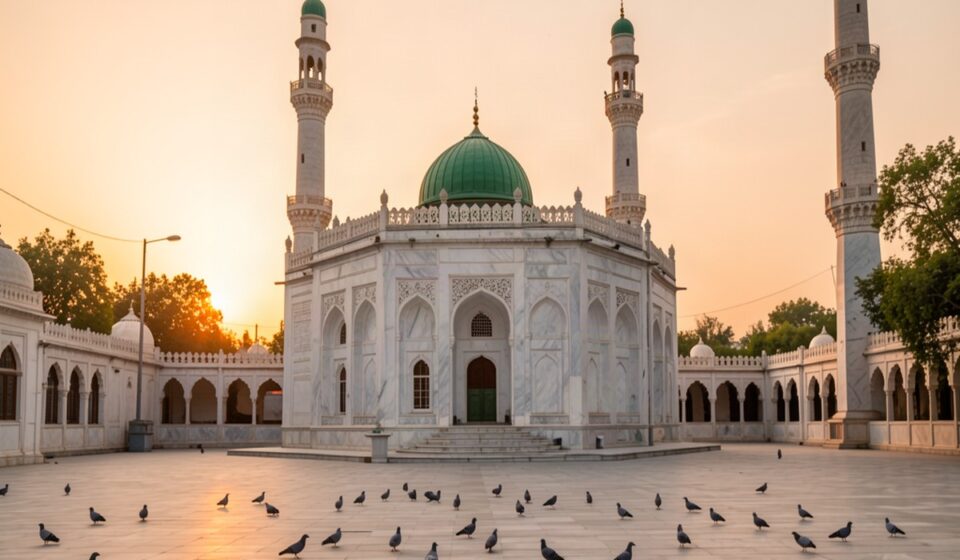

Introduction: The Spiritual Journey of Sufi Music Spiritual
Qawwali is a vibrant and spiritually charged form of devotional music that has captivated hearts for centuries. At its core lies a profound connection to the Divine, expressed through soul-stirring poetry and hypnotic rhythms that transport listeners into a state of spiritual ecstasy. Within this rich and sacred tradition, Sufi Music Spiritual holds a unique and special place, representing a beautiful blend of artistic mastery and deep spiritual longing.
The tradition of Qawwali dates back over 700 years, attributed to the great Sufi saint Amir Khusrow, who sought to create a musical form that could make the experience of divine love accessible to all. Since those early days, Qawwali has evolved into a powerful medium for spiritual transmission, with legendary performers like Nusrat Fateh Ali Khan taking its soulful melodies to global audiences. Today, the exploration of Sufi Music Spiritual within the Qawwali tradition continues to inspire new generations of listeners, inviting them into a world where music becomes a pathway to the Divine.
Background & Significance
The Rich History of Sufi Music Spiritual in Qawwali
The history of Qawwali is inseparable from the Sufi tradition of South Asia, where it emerged as a spiritual practice designed to make the experience of divine love accessible to people from all walks of life. Originating in the 13th century under the guidance of Hazrat Nizamuddin Auliya and his brilliant disciple Amir Khusrow, Qawwali was carefully crafted as both an art form and a spiritual discipline. Within this framework, the exploration of Sufi Music Spiritual emerged as a powerful expression of devotional longing.
Over the centuries, Qawwali has evolved while retaining its core purpose: to stir the soul toward divine love and spiritual awakening. The great Qawwals of the 20th and 21st centuries — from the legendary Sabri Brothers to the incomparable Nusrat Fateh Ali Khan, from the philosophical depth of Aziz Mian to the contemporary brilliance of Rahat Fateh Ali Khan — each brought their unique gifts to this living tradition. The story of Sufi Music Spiritual within Qawwali reflects this rich heritage, blending classical poetic forms with evolving musical sensibilities to create an experience that transcends time and culture.
The instruments of Qawwali — the harmonium, tabla, and rhythmic clapping — are not mere musical tools but vessels of spiritual transmission. Each performance is a journey, beginning slowly and building in intensity as the performers and audience together ascend toward spiritual heights. Understanding Sufi Music Spiritual means understanding this journey — how the architecture of a Qawwali performance mirrors the soul’s journey toward its Creator.
Key Aspects
Notable Figures Associated with Sufi Music Spiritual
The world of Qawwali has been blessed with numerous extraordinary artists who have shaped and defined this sacred tradition. The story of Sufi Music Spiritual within Qawwali has been enriched by many legendary figures, each bringing their unique spiritual depth and artistic brilliance to the tradition.
Nusrat Fateh Ali Khan — perhaps the most famous Qawwal in history — brought Qawwali to international audiences while maintaining its spiritual essence. His extraordinary vocal range and improvised compositions elevated Qawwali to new heights, earning him the title “Shahenshah-e-Qawwali” (The King of Kings of Qawwali). His renditions of classical Sufi poetry continue to inspire millions worldwide.
The Sabri Brothers (Ghulam Farid Sabri and Maqbool Ahmed Sabri) were known for their powerful, emotionally charged performances that could transport listeners into a state of spiritual ecstasy. Their mastery of traditional Qawwali forms combined with innovative arrangements created some of the most beloved recordings in the genre.
Aziz Mian Qawwal brought a unique philosophical depth to Qawwali, often incorporating complex poetic themes into his performances. His powerful voice and distinctive style made him one of the most respected figures in the tradition.
Rahat Fateh Ali Khan has skillfully bridged traditional Qawwali with contemporary music, introducing this spiritual art form to new generations while maintaining respect for its sacred character. Abida Parveen, though technically a Sufi singer rather than a Qawwal in the traditional sense, has contributed enormously to popularizing Sufi devotional music globally.
Practical Guidance
How to Experience and Appreciate Sufi Music Spiritual
For those new to Qawwali, experiencing Sufi Music Spiritual is a journey of the heart that unfolds gradually. Begin by finding a quiet space where you can listen without distraction — close your eyes and allow the music to wash over you, focusing not on analyzing the performance but on feeling its spiritual impact.
Start with the classic recordings of Nusrat Fateh Ali Khan or the Sabri Brothers, paying attention to the structure of the performance: the slow, meditative opening that gradually builds in intensity, the interaction between the lead Qawwal and the chorus, and the climactic moments of spiritual intensity. Follow along with translations of the poetry to deepen your understanding — Qawwali lyrics draw from the works of great Sufi poets like Rumi, Hafez, and Bulleh Shah, and are rich with spiritual meaning.
In the digital age, YouTube channels like Markaz Halqa E. Rehmani offer curated collections of high-quality Qawwali performances that you can enjoy from anywhere in the world. Attending a live Qawwali performance (Mehfil-e-Sama) is a transformative experience that cannot be replicated through recordings — the collective energy of performers and audience creates an atmosphere uniquely conducive to spiritual elevation.
Modern Relevance
Qawwali and Sufi Music Spiritual in the Digital Age
The digital revolution has transformed how people discover, experience, and share Qawwali. Streaming platforms, YouTube channels, and social media have made the world’s greatest Qawwali performances accessible to anyone with an internet connection, breaking down the geographical and cultural barriers that once limited access to this spiritual art form.
This democratization of access has led to a remarkable resurgence of interest in Qawwali among younger generations, both in South Asia and in the global diaspora. Young people who may never have attended a live Mehfil-e-Sama can now explore the rich tradition of Qawwali through digital platforms, discovering the spiritual power of this music for themselves.
Channels like Markaz Halqa E. Rehmani play a vital role in preserving and promoting this heritage, offering carefully curated collections of classic and contemporary Qawwali performances. The combination of high-quality audio, insightful context, and easy accessibility ensures that the spiritual power of Qawwali continues to reach new hearts in the digital age, carrying forward a tradition that has inspired seekers for over seven centuries.
Conclusion
As we have seen throughout this article, this topic represents far more than a mere concept — it is a living tradition that continues to inspire, transform, and elevate those who engage with it sincerely. Its beauty lies not only in its rich history and cultural significance but in its power to touch the human heart and draw it closer to the Divine through the universal language of devotion.
May this exploration serve as a stepping stone on your own spiritual journey. We invite you to continue learning and growing with Markaz Halqa E. Rehmani, your trusted source for authentic Islamic spiritual content that nourishes the soul and strengthens faith.
📺 Subscribe to Markaz Halqa E. Rehmani on YouTube
Join 1.53K subscribers for daily Qawwali, Naat, Islamic Bayanat & Spiritual content!
🔔 Hit the bell icon to get notified of new uploads